Before the golf, the sloths.
Skidaway Island has its own Ice Age giant: a ground sloth the size of an elephant, found here in 1823.
October 5, 2026 · Skidaway Island, Savannah, GA
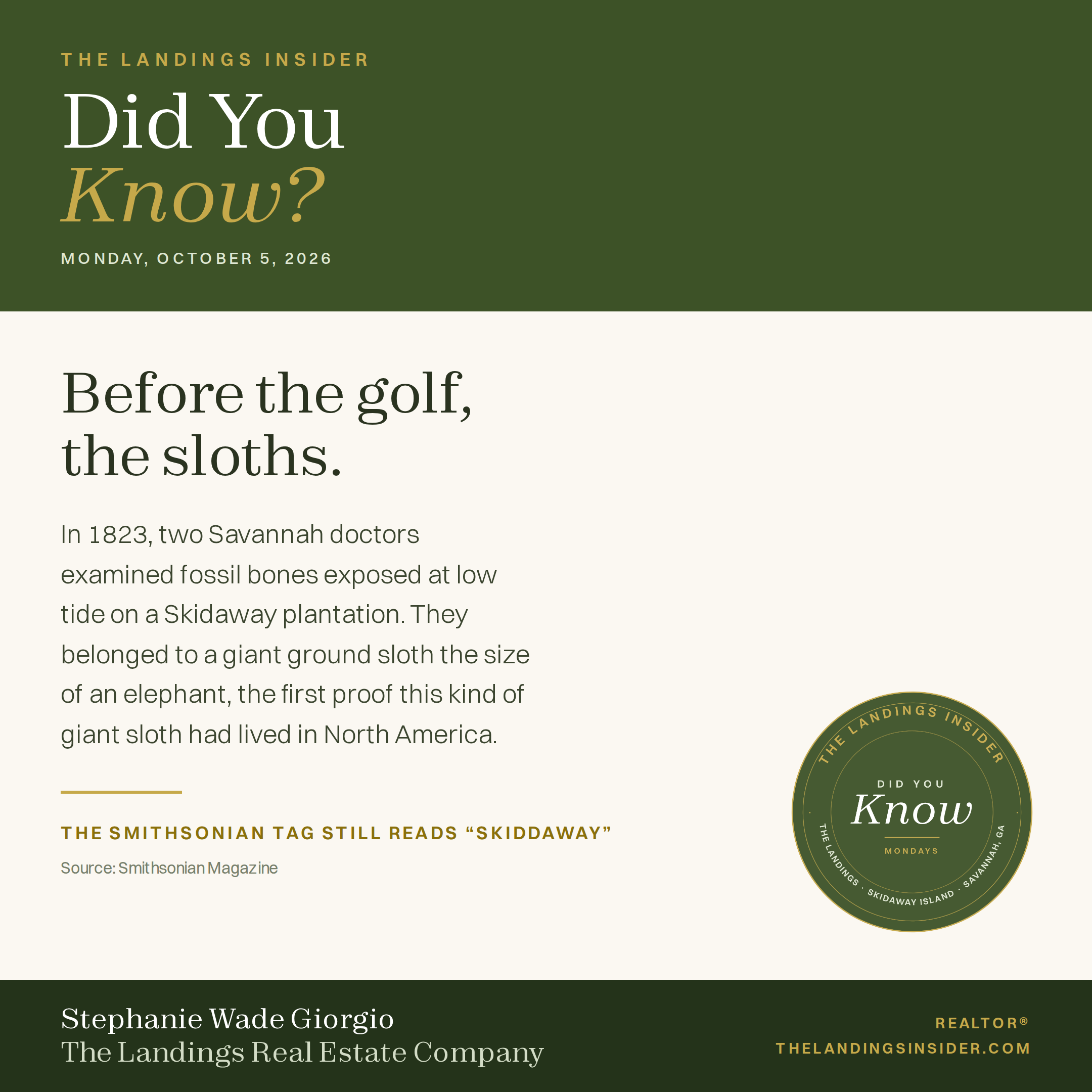
Long before the first tee time, Skidaway Island had a much larger resident. It was a ground sloth, and it was the size of an elephant.
Bones at low tide
In 1823, two Savannah doctors, James Proctor Screven and John C. Habersham, were invited by a plantation owner named Stark to look at fossil bones showing at low tide in a bank beside a tidal pond on his Skidaway property. They took a set of the bones home, and Screven studied them.
Island lore tells it more vividly. A Habersham, rowing out to Skidaway, spotted what he took for a post standing in the water. It was not a post. It was bone.
A giant the size of an elephant
The bones belonged to a giant ground sloth. Screven called it Megatherium, the giant sloth of South America. Today it is considered most likely Eremotherium, its North American relative, a difference scientists did not sort out until 1948. Eremotherium was one of the largest sloths that ever lived, about the size of an elephant and roughly 3 to 5 tons.
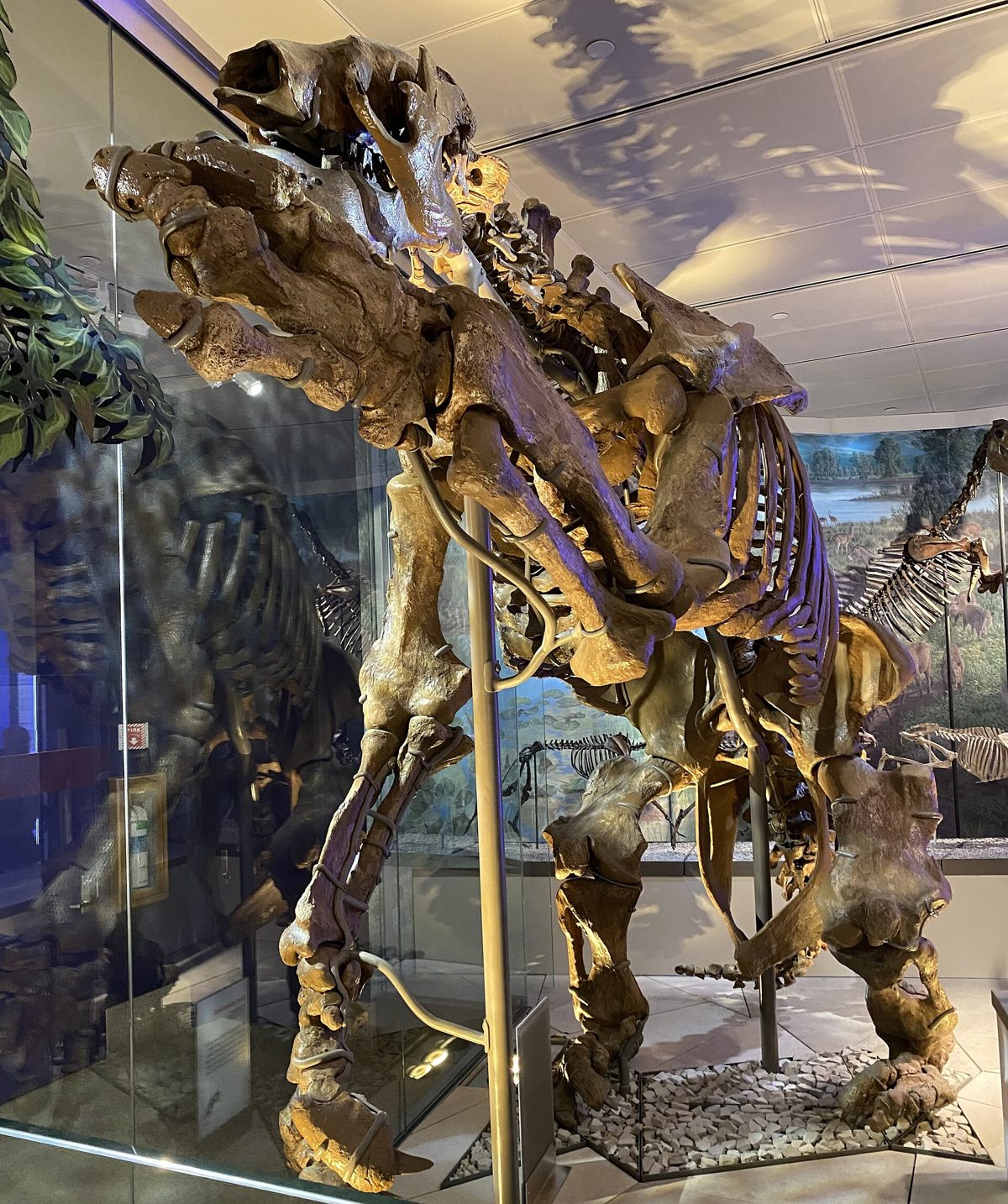
A first for North America
The find mattered well beyond the island. It was the first proof that this kind of giant sloth had lived in North America. In 1842 Screven shipped three boxes of the fossils to Washington, and they passed to the Smithsonian. The old tag there still spells it “Skiddaway” Island.
So before the golf, before the bridge, and long before any of us, this island belonged to a giant.
Questions people ask
What giant animal was found on Skidaway Island?
A giant ground sloth. Fossil bones examined on Skidaway Island in 1823 are now considered most likely Eremotherium, one of the largest sloths that ever lived.
When were the giant sloth fossils found on Skidaway Island?
In 1823. Two Savannah doctors, James Proctor Screven and John C. Habersham, were invited to examine fossil bones exposed at low tide on a Skidaway plantation.
How big was the giant ground sloth?
Eremotherium was about the size of an elephant and weighed roughly 3 to 5 tons.
Where are the Skidaway Island sloth bones now?
At the Smithsonian. Screven shipped them to Washington in 1842, and they passed to the Smithsonian, where the old tag spells the island “Skiddaway.”
Sources
The Landings — 5 intriguing secrets of The Landings (the rowing story)
Georgia’s Fossils — Eremotherium laurillardi on Skidaway Island, 1823
The Charleston Museum — An Ice Age behemoth: the North American giant ground sloth
Wikipedia — Eremotherium
The Landings Insider Report
Published every Wednesday — the market and all things The Landings.
Read this week’s report →